
Ideas, Makers & Inspiration
Discover Irish makers, creative ideas, gift inspiration, product stories and updates from the growing Craftgifts.ie community.
New EU Packaging Rules: What CraftGifts Sellers Need to Know
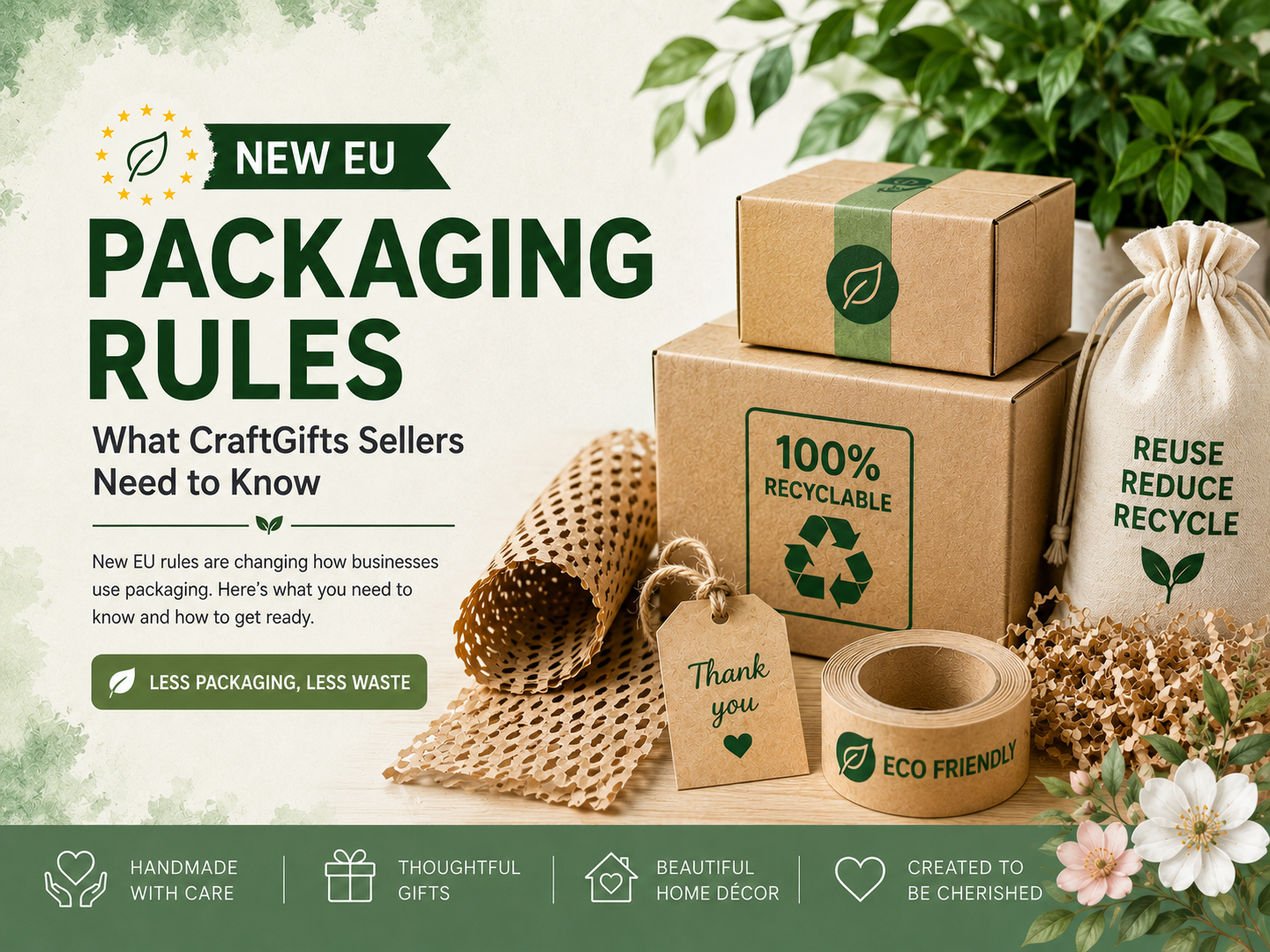
If you sell handmade or craft products online, packaging is part of getting your products safely into your customers' hands. New European Union rules are now changing how businesses need to think about that packaging.
The EU Packaging and Packaging Waste Regulation (EU) 2025/40, commonly known as the PPWR, introduces new requirements covering packaging and packaging waste throughout the European Union.
The Regulation entered into force in February 2025 and most of its provisions apply from 12 August 2026, although many of the more significant practical requirements are being introduced progressively over the coming years.
For CraftGifts sellers, there is no need to completely redesign your packaging overnight. However, it is important to understand the direction of the new rules and start making sensible packaging choices now.
What Counts as Packaging?
The rules cover considerably more than gift boxes.
- Product and presentation boxes
- Cardboard postal boxes
- Mailing bags and envelopes
- Protective wrapping
- Paper and cardboard filling
- Bubble wrap and other protective materials
- Bottles, jars and containers where they constitute packaging
- Labels and certain packaging components
- Packaging used specifically for online deliveries
Importantly for CraftGifts sellers, e-commerce packaging is specifically covered by the new regime.
This means the box, mailer or other packaging used to send an online order to your customer can be just as relevant as the packaging immediately surrounding the product.
The Basic Principle: Use Less Packaging
One of the central objectives of PPWR is packaging minimisation.
Packaging should be appropriate to the product and should not contain unnecessary material or excessive empty space.
For example, sending a small handmade item in a very large box filled with excessive amounts of plastic or paper simply because that box happened to be available is increasingly inconsistent with the direction of EU packaging policy.
This does not mean that sellers should inadequately protect fragile products. A ceramic mug, framed print, glass product or other delicate handmade item still needs sufficient protection to survive delivery.
The objective is to use enough packaging to protect the product properly, without unnecessary excess.
From 2030, new EU requirements concerning empty space in e-commerce and certain other packaging will also begin to apply, subject to the detailed implementation timetable.
Packaging Will Increasingly Need to Be Recyclable
Another major objective of PPWR is to ensure that packaging placed on the European market can be recycled effectively.
Over time, packaging will have to satisfy increasingly detailed design-for-recycling requirements.
For small craft businesses, the practical lesson is relatively straightforward: choose simple, readily recyclable packaging wherever reasonably possible.
A cardboard box made primarily from one readily recyclable material will generally present fewer recycling difficulties than complicated packaging made by permanently combining several different materials.
When purchasing packaging, particularly in larger quantities, sellers should increasingly look for established suppliers who can provide proper information about the materials used.
New Packaging Labels Are Coming
The EU is also introducing harmonised packaging labels. Eventually, packaging will use standardised labels identifying its material composition and helping consumers understand the appropriate waste stream.
However, sellers should not start inventing their own versions of the future EU labels. The harmonised labelling requirements are being introduced according to the timetable set out in the Regulation and subsequent implementing measures.
CraftGifts will provide sellers with further guidance as the final labelling requirements applicable to them become operational.
What About Plastic Packaging?
The Regulation also introduces minimum recycled-content requirements for certain plastic packaging. These requirements will become increasingly important from 2030 onwards.
For most small CraftGifts sellers, the practical solution will be to purchase mailing bags, protective packaging and other packaging materials from reputable suppliers that provide appropriate product and compliance information.
Sellers are not expected to become plastics engineers. However, keeping invoices, product specifications and packaging information supplied by your packaging supplier is a sensible practice.
Be Careful with Environmental Claims
Sellers should also be careful about statements such as "100% sustainable", "completely environmentally friendly" or "zero-impact packaging".
EU rules concerning environmental claims are becoming considerably stricter, and the PPWR itself contains requirements concerning environmental claims made about packaging characteristics.
A specific, verifiable statement is much better. For example: "This postal box is made from 80% recycled cardboard."
That is a factual claim which can potentially be supported by information from your packaging supplier. A vague claim that packaging is "completely eco-friendly" is much more difficult to substantiate.
Producer Registration and Packaging Responsibility
One of the more significant changes under PPWR concerns Extended Producer Responsibility (EPR).
Businesses that qualify as producers can be required to register in the relevant Member State and contribute towards the costs associated with managing the packaging waste they place on the market.
The precise obligations applicable to an individual seller will depend on matters including where the seller is established, what packaging or packaged products they place on the market and the countries into which they sell.
Selling to consumers in several EU countries can therefore involve additional considerations.
The new Regulation also places obligations on online marketplaces concerning producer registration information.
As the new national registration systems and associated requirements develop, CraftGifts will introduce appropriate facilities for sellers to provide and maintain the required packaging compliance information through their seller accounts.
Will Small CraftGifts Sellers Be Exempt?
Sellers should not assume that being a small or micro business automatically removes all packaging obligations.
PPWR contains a number of special provisions and exemptions relating to particular requirements, and simplified reporting can apply in certain circumstances.
However, there is no universal rule that says a small craft business can simply ignore the Packaging and Packaging Waste Regulation.
The requirements applicable to a business depend on what it does. CraftGifts will therefore try to make the compliance process proportionate and straightforward rather than asking every seller to interpret the entire Regulation themselves.
What Should CraftGifts Sellers Do Now?
- Review the packaging you currently use. Look for unnecessary packaging and excessive empty space.
- Prefer readily recyclable materials where practical. Paper and cardboard solutions may be preferable in many circumstances, provided they adequately protect the product.
- Don't compromise product protection. Reducing packaging does not mean sending fragile handmade products inadequately protected.
- Keep information from packaging suppliers. Retain invoices, specifications and information concerning recycled content or material composition.
- Avoid unsupported environmental claims. Use specific, factual statements that you can substantiate.
- Consider where you sell. Sellers shipping to consumers in other EU Member States should be aware that producer and EPR obligations can arise in destination countries.
- Watch your CraftGifts seller dashboard. We will introduce additional packaging-compliance information and facilities as the new requirements become applicable.
CraftGifts Will Make This as Straightforward as Possible
CraftGifts is a marketplace for independent makers and sellers. We recognise that a craft business producing candles, ceramics, artwork, jewellery or personalised gifts does not have the compliance department of a multinational retailer.
Our objective is therefore to make the new requirements manageable.
As the PPWR regime develops, CraftGifts intends to provide sellers with appropriate facilities for recording relevant producer-registration and packaging-compliance information.
Where practical, we will also provide guidance explaining what information is required and when action needs to be taken.
This does not transfer an individual seller's legal obligations to CraftGifts, but it should make complying with those obligations considerably easier.
A Sensible Approach to Packaging
The underlying objective of the new rules is something most independent makers can support: products should arrive safely without creating unnecessary packaging waste.
For CraftGifts sellers, the best approach is to start with the basics:
Protect the product. Use appropriate packaging. Avoid unnecessary waste. Choose recyclable materials where practical. Keep information from your suppliers. And make environmental claims only when you can support them.
CraftGifts will continue to monitor the implementation of the new EU packaging rules and provide sellers with further guidance as the detailed requirements come into effect.
This article provides general information for CraftGifts sellers and is not intended to constitute legal advice. The requirements applicable to an individual business can depend on its activities, packaging and the countries in which its products are placed on the market.
Recent posts
- New EU Packaging Rules: What CraftGifts Sellers Need to Know
- Crafted Bloom Flowers Joins Craftgifts.ie
- Welcome AndreasKnots to Craftgifts.ie
- Coming Soon: Gifts4U.ie — Our New Partner Marketplace
- Pamper Your Loved Ones!
- CraftGifts.ie: Celebrating Irish Craftsmanship and Heritage
- Tasty Artisanal Treats, Handmade in Ireland